Biotech
5 Early-Stage German Biotech Startups Building Across the R&D Pipeline
DealBio tracks early-stage biotech startups across Europe and North America. These 5 German startups show how new companies are entering different points of the R&D pipeline, from research infrastructure and protein design to cell-therapy tools and therapeutic development.
- Germany
- Biotech
- Drug R&D
- Research Tools
Biotech value is created long before a molecule reaches a patient. Research teams need better experimental systems, more predictable proteins, more consistent measurement tools and new ways to turn biological mechanisms into treatments. Germany's early-stage pipeline includes startups attacking each of those layers.
The useful comparison is therefore not which technology is furthest along. It is where each startup is trying to remove uncertainty from R&D, and whether the product or platform has evidence that it can improve that specific step.
At a Glance
- RevoBITsGermany2026Bioprinting and tissue-model research
- OrbionGermany2025AI protein-engineering software
- ProtoVelaGermany2025AI-assisted protein design
- BlueRay PrecisionGermany2025CAR-T research reagents
- EpithelicaGermany2025Topical gene-editing therapeutics

01
RevoBITs
Building sensor-equipped bioprinters for human tissue models and drug research.
- Country
 Germany
- Founded
- 2026
- Sector
- Biotech
- Funding stage
- Seed or earlier
Why RevoBITs stands out
RevoBITs sits near the beginning of the R&D pipeline, where researchers need reproducible tissue models before they can make downstream drug-development decisions. The startup secured €1.25 million through EXIST Research Transfer, and its byte 1 system is being piloted at University Hospital Würzburg and University Hospital FAU Erlangen.
That makes the funding more meaningful than a grant in isolation: it is attached to the move from academic biofabrication research toward a laboratory product being tested in real research settings.
What RevoBITs is building
byte 1 is an extrusion bioprinter for tissue-model research, bioink development and preclinical testing. It can combine up to four materials through one nozzle, control two temperature zones and measure material behavior during printing.
The R&D value is tighter control over how a tissue model is produced and characterized. If researchers can understand what happens during the print rather than only after it, the platform can help make experiments easier to compare and repeat.

02
Orbion
Using AI to predict protein expression, stability and developability before lab work.
- Country
- Germany
- Founded
- 2025
- Sector
- Biotech
- Funding stage
- Seed or earlier
- Founders
Why Orbion stands out
Orbion targets an earlier decision in protein R&D: which constructs are worth making and testing in the laboratory. Its software predicts expression, stability and developability from sequence, helping teams rank candidates before committing experimental time and materials.
The startup has also brought repeat-founder experience into the commercial side of the platform. Co-founder Çağlar Bozkurt previously co-founded Twentify, while Orbion has added accelerator investment from QAI Ventures.
What Orbion is building
Orbion offers subscription software that scores protein sequences and proposed mutations for properties that matter during development. Instead of treating AI as a separate research layer, the product is designed to sit before wet-lab iteration and narrow the experimental search space.
That places Orbion directly on the design side of the R&D pipeline: its value depends on whether computational ranking can reduce the number of low-value constructs that researchers need to produce and test.
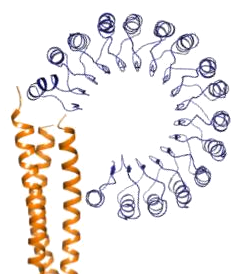
Designing AI-optimized protein variants with improved stability and expression.
- Country
- Germany
- Founded
- 2025
- Sector
- Biotech
- Funding stage
- Seed or earlier
- Founders
Why ProtoVela stands out
ProtoVela is also working on protein design, but with a different model: applying AI-assisted design alongside deep structural-biology expertise to improve proteins for specific industrial and drug-development needs.
In prior industrial work, all eight selected enzyme variants expressed successfully; the strongest design raised melting temperature from 54°C to 75°C and produced around three times the parent yield. That gives the platform a concrete example of design choices translating into measurable laboratory performance.
What ProtoVela is building
ProtoVela designs protein variants around properties such as expression, stability, solubility and manufacturability. Founder Kornelius Zeth brings more than three decades of protein-structure experience to the platform.
The startup therefore sits between computational design and experimental optimization. Its R&D role is not simply to generate more sequences, but to produce a smaller set of variants engineered around the constraints that determine whether a protein can be developed efficiently.
Developing research reagents to detect and measure CAR-T cells.
- Country
- Germany
- Founded
- 2025
- Sector
- Biotech
- Funding stage
- Seed or earlier
Why BlueRay Precision stands out
BlueRay Precision addresses a measurement problem further downstream. Its CAR-T detection reagents are used in research workflows at DKFZ, Heidelberg University Hospital and University Hospital Erlangen, while more than €1 million in EXIST Forschungstransfer funding supports the project.
More than 2,000 CAR-T samples were analysed during development. For an R&D tool, that usage matters because the product has to work inside an existing flow-cytometry workflow rather than creating a new measurement system from scratch.
What BlueRay Precision is building
BlueRay develops CD19 and BCMA antigen-based reagents that bind engineered CAR receptors and can be read on standard flow cytometers. Engineered proteins and controlled labelling are designed to reduce background staining and batch-to-batch variation.
Its place in the pipeline is quality and comparability: giving cell-therapy teams a more standardized way to measure engineered cells as candidates move through research and development.

Developing topical gene-editing therapies for inherited skin diseases.
- Country
- Germany
- Founded
- 2025
- Sector
- Biotech
- Funding stage
- Seed or earlier
- Founders
Why Epithelica stands out
Epithelica represents the therapeutic end of the group. A 2026 Cell Stem Cell study corrected the target TGM1 mutation in human ARCI skin models and restored about 30% of normal transglutaminase 1 activity. The lead programme has also received US and EU orphan drug designations.
The startup therefore combines a defined disease mechanism with evidence that the editing approach can restore function in a human skin model, rather than beginning from a broad gene-editing platform claim.
What Epithelica is building
Epithelica combines a fractional dermatology laser, lipid nanoparticles and base editing to deliver genetic correction locally into the skin. The lead programme targets TGM1 mutations that cause autosomal recessive congenital ichthyosis.
The approach is designed around local treatment: creating temporary micropores, delivering the editor into living epidermal cells and limiting systemic exposure. That makes delivery part of the therapeutic thesis, not an afterthought.
Deal Sourcing for Investors
Looking for More Startups Like These?
DealBio helps investment teams discover, research, and monitor early-stage healthcare and life sciences startups aligned with their investment criteria.
Investment perspective
The spread across research tools, software, reagents and therapeutics matters because each model has a different proof cycle and capital requirement. A laboratory tool can reach commercial validation before clinical risk appears; design software can show value through better experimental outcomes; a therapeutic needs progressively deeper biological and clinical evidence.
For investors, the better comparison is therefore the cost and time required to reach the next value-creating proof point. Where modest capital can unlock adoption, repeat use or a strong experimental result, financing efficiency can be attractive. Where the next step requires expensive preclinical or clinical work, the bar for differentiation and prior evidence should be correspondingly higher.
Methodology
DealBio selected these startups from its database of early-stage health and longevity startups, focusing on Germany-based biotech businesses working at distinct points in research and development. The selection spans laboratory infrastructure, protein design, cell-therapy measurement and therapeutics.
DealBio builds its Startup Briefs using publicly available company materials, ecosystem sources, market references and professional profiles.