Biotech
6 Early-Stage Biotech Startups to Watch in 2026
DealBio tracks early-stage biotech startups across Europe and North America. These 6 stand out in 2026 for combining differentiated science with evidence of product, research or translational progress.
- Biotech
- Drug Discovery
- Therapeutics
- Research Tools
DealBio tracks early-stage biotech startups across Europe and North America. These 6 stand out in 2026 for combining differentiated science with evidence of product, research or translational progress.
The group is deliberately broad. Some are selling or piloting research tools, while others are advancing therapeutics toward the clinic. That breadth is useful because early biotech is not moving along a single path: AI is changing protein design, research instruments are becoming more data-rich, and therapeutic teams are building more control into how drugs recognize or reach diseased tissue.
The reason to watch each startup is therefore different. What matters is whether the evidence is becoming more specific as the company advances.
At a Glance
- RevoBITsGermany2026Sensor-equipped bioprinting
- OrbionGermany2025AI protein engineering
- LumoxNetherlands2025Light-activated oncology
- Akribion TherapeuticsGermany2024RNA-guided cancer cell depletion
- ProtoVelaGermany2025AI-assisted protein design
- VG2D PharmaFrance2024Oral cystic fibrosis therapy

01
RevoBITs
Building sensor-equipped bioprinters for human tissue models and drug research.
- Country
 Germany
- Founded
- 2026
- Sector
- Biotech
- Funding stage
- Seed or earlier
Why RevoBITs stands out
RevoBITs secured €1.25 million in non-dilutive EXIST Research Transfer funding and is piloting byte 1 at two German university hospitals. Its prototype has also been used in published bioink-characterization experiments.
The combination is notable for a young research-tool startup: academic engineering has moved into a product being used to test how bioprinting can become more measurable and reproducible.
What RevoBITs is building
byte 1 combines multi-material extrusion, independent temperature control and inline material characterization. Researchers can prepare models, characterize inks, print constructs and analyze process data within one workflow.
That makes RevoBITs worth watching as bioprinting moves from demonstrations toward repeatable research infrastructure.

02
Orbion
Using AI to predict protein expression, stability and developability before lab work.
- Country
- Germany
- Founded
- 2025
- Sector
- Biotech
- Funding stage
- Seed or earlier
- Founders
Why Orbion stands out
Orbion targets a costly part of protein development: producing and testing constructs that may fail on expression, stability or developability. Its AI models rank designs before lab work, and the startup has added accelerator investment from QAI Ventures.
Co-founder Çağlar Bozkurt also brings repeat-founder experience from Twentify, giving the team a commercial track record alongside the technical platform.
What Orbion is building
Orbion's subscription software predicts protein behavior from sequence and helps teams prioritize constructs and mutations for experimental testing.
The investment question is straightforward: whether prediction quality can translate into fewer experimental cycles. If it does, the product can sit directly inside an existing biotech R&D budget rather than depend on creating a new category of work.

03
Lumox
Developing a light-activated cancer therapy designed to spare healthy tissue.
- Country
 Netherlands
- Founded
- 2025
- Sector
- Biotech
- Funding stage
- Seed or earlier
Why Lumox stands out
Lumox has secured more than €4.5 million from KWF for a planned first patient study in head and neck cancer. Its platform has also been used in veterinary practice in cats with oral cancer, where multiple patients had tumors eradicated without reported treatment-related side effects.
That gives the startup a defined path toward human translation rather than a platform without a lead setting.
What Lumox is building
Selective PhotoTherapy combines a tumor-targeting nanobody with a light-activated drug. The drug is intended to accumulate in EGFR-positive cancer cells and become active only where clinicians apply red light.
The approach combines molecular targeting with spatial control. Lumox starts in head and neck cancer, where tumors can be accessible to local illumination.

Developing RNA-guided therapies to selectively destroy cancer cells.
- Country
- Germany
- Founded
- 2024
- Sector
- Biotech
- Funding stage
- Seed or earlier
Why Akribion Therapeutics stands out
A May 2026 study showed reduced growth of HPV-positive head and neck tumors in mice after local nanoparticle delivery of the startup's RNA-guided nuclease system. Akribion also raised an €8 million seed round in 2025 and holds an exclusive pharmaceutical licence for G-dase E.
The programme therefore combines financing, licensed IP and disease-specific preclinical evidence around the same therapeutic mechanism.
What Akribion Therapeutics is building
G-dase E is designed to recognize a chosen intracellular RNA signal and then trigger destructive nuclease activity inside that cell. The initial programme targets viral transcripts in HPV-positive throat cancer.
Unlike gene correction, the aim is selective cell depletion. That gives Akribion a clear therapeutic thesis: use RNA as the trigger that determines which cells are destroyed.
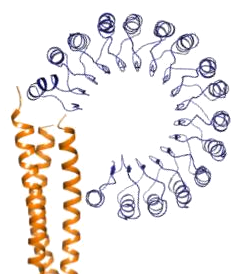
Designing AI-optimized protein variants with improved stability and expression.
- Country
- Germany
- Founded
- 2025
- Sector
- Biotech
- Funding stage
- Seed or earlier
- Founders
Why ProtoVela stands out
ProtoVela combines AI-assisted protein design with more than 30 years of structural-biology experience from founder Kornelius Zeth. In prior industrial work, all eight selected enzyme variants expressed, the strongest raised melting temperature from 54°C to 75°C and yield reached around three times the parent.
That is the kind of evidence an early protein-design startup needs: not simply model output, but laboratory performance on properties that matter to development.
What ProtoVela is building
ProtoVela designs protein variants around stability, expression, solubility and manufacturability. The service model connects computational design to specific experimental objectives rather than selling a general-purpose AI layer.
Its progress is worth watching as protein engineering becomes increasingly computational but still has to prove itself in the lab.
Developing a new oral therapy for cystic fibrosis.
- Country
 France
- Founded
- 2024
- Sector
- Biotech
- Funding stage
- Seed or earlier
Why VG2D Pharma stands out
VG2D Pharma is developing an oral small-molecule approach intended for cystic fibrosis patients with class II–VI CFTR mutations. The programme is backed by patent protection, public innovation funding and in-vitro and in-vivo proof of concept.
The startup also adds an anti-inflammatory component to its therapeutic strategy, addressing more than one part of the disease biology within an oral treatment concept.
What VG2D Pharma is building
VG2D is advancing a CFTR-targeting therapy designed to improve dysfunctional protein activity across a broader mutation group while also addressing inflammation.
The investment case will increasingly depend on how that preclinical profile translates into a development programme with clear dosing, safety and efficacy milestones.
Deal Sourcing for Investors
Looking for More Startups Like These?
DealBio helps investment teams discover, research, and monitor early-stage healthcare and life sciences startups aligned with their investment criteria.
Investment lens
These six startups are not comparable on a single maturity scale. A research instrument can create early value through pilots and recurring laboratory use; a protein-design platform through measurable improvements in experimental outputs; a therapeutic through increasingly stringent evidence as it approaches patients.
The shared signal is that each has moved beyond a broad scientific promise and attached its technology to a more concrete proof point. For investors, the next question is whether that proof keeps getting harder to obtain—and more commercially meaningful—as the startup advances.
Methodology
DealBio selected these startups from its database of early-stage health and longevity startups, focusing on biotech businesses with differentiated technology and recent evidence of product, research or translational progress. The selection intentionally spans research tools, computational platforms and therapeutics.
DealBio builds its Startup Briefs using publicly available company materials, ecosystem sources, market references and professional profiles.